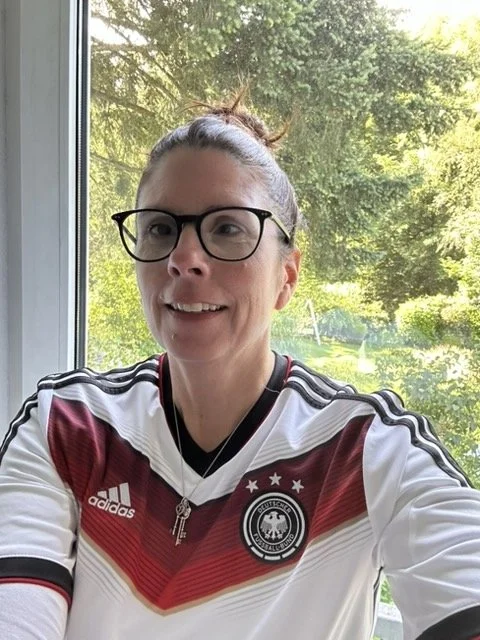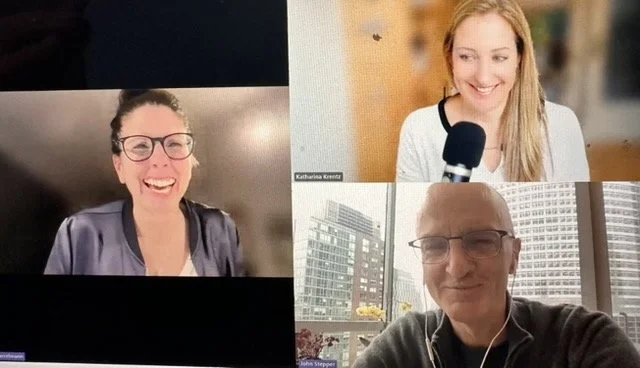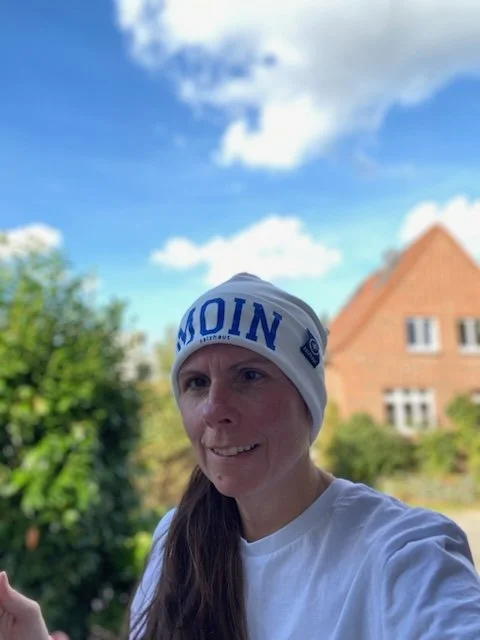
Meet our newest WOL Coach: Anja Varrelmann
Every time I talk with Anja I leave with new ideas, new insights, and a smile. She challenges me and inspires me and always does so in a way that feels warm and inviting.
She sees that Working Out Loud isn’t so much about any one method as it is about creating a certain kind of space for people to grow and connect.
“I see a broader need in how we work today: we are more connected than ever, but often at a very surface level. We like, click, and react, but real exchange, where people are actually heard and challenged, is rare.
Working Out Loud creates a different kind of space. It brings depth back into interaction not by slowing everything down, but by enabling real conversations, shared thinking, and visible progress.”
The more we talk, the more possibilities we see. Could we create these spaces with young people in the new NGO she co-founded, UNFOLD e.V? Or with families using the WOL Strengths method? We will find out. Together.
I know Anja will be an excellent WOL Coach, and I can’t wait to see what we do together.
For each new WOL Coach, I ask three questions so you can get to know them and what drives them. You can also visit Anja’s WOL Coach profile on workingoutloud.com. Or connect with her on LinkedIn or at varrelmann@hotmail.com.
1. Please share 5 facts about you so people get to know you.
I don’t let conversations end in false clarity. I keep asking questions until people can no longer hide behind words and actually agree on meaning not just wording.
I connect what others treat as separate. I bring earlier statements back into the room, reframe them, and force conversations to deal with their own history.
I’m brought into situations where things are already moving, but no one can clearly say what “good” looks like anymore. The scope is unclear, the setup messy decisions are delayed, not missing.
I see people clearly often before they see it themselves. I name patterns and potential early and make them visible in a way that forces movement, not reflection.
I bring clarity and lightness into tense situations. With humor and a grounded mindset, I often shift dynamics before they escalate. When I’m in the room, people notice not because I dominate it, but because the temperature changes.
2. What positive difference do you aspire to make?
I want organizations to stop getting stuck in endless alignment that leads nowhere. Too many discussions, too little clarity, too many people agreeing on words instead of meaning.
I step into situations where things are already moving, but no one can clearly say what “good” looks like anymore. My role is to make what is unspoken visible, connect fragmented perspectives, and turn it into something people can actually decide on.
For me, leadership, culture, and collaboration are not soft topics. They are what either slows everything down or makes things move. When they are unclear, nothing really works. When they are clear, execution becomes almost obvious.
I don’t believe in more frameworks. I believe in better conversations the kind where assumptions are challenged, decisions become unavoidable, and responsibility is actually taken.
A lot of my work is about cutting through noise and bringing focus back: What are we actually trying to do here? Who decides? And what needs to happen next?
And I care about how people work together while doing that. Not in theory, but in real life under pressure, across functions, across perspectives.
In short: I want to help organizations move from being busy to being clear and from being clear to actually moving.
3. Why WOL?
What I value about Working Out Loud is that it turns intention into action. It creates structure that moves people forward instead of keeping them in reflection, and it connects people across boundaries who would otherwise never interact.
At the same time, I see a broader need in how we work today: we are more connected than ever, but often at a very surface level. We like, click, and react but real exchange, where people are actually heard and challenged, is rare.
Working Out Loud creates a different kind of space. It brings depth back into interaction not by slowing everything down, but by enabling real conversations, shared thinking, and visible progress.
For me, this is exactly why it fits my way of working. I don’t believe in isolated thinking or closed circles. I believe in structured exchange that leads to action, and in environments where people are not just performing, but actually thinking and developing together.
WOL is flexible enough to work in very different contexts small teams, large organizations, different cultures and setups. That adaptability is important to me, because real development doesn’t happen in one format, but across many situations and levels.
In short: Working Out Loud is not just a method I use. It reflects how I already work creating clarity, connection, and movement in complex environments.
![Anja Varrelmann Profile Photo [CROPPED].jpeg](https://images.squarespace-cdn.com/content/v1/61d7e9932dbc0e2d262505b8/1777932045912-7K36CRYSIXI7P7F9U130/Anja+Varrelmann+Profile+Photo+%5BCROPPED%5D.jpeg)